Credits
| Director | Nina Pikhodchuk |
| Scriptwriter | Nina Pikhodchuk |
| Scriptwriter | Uliana Zvereva |
| Scriptwriter | Evgenia Nazipova |
| Producer | Nina Pikhodchuk |
| Producer | Anfisa Liaznikova |
| Producer | Dmitriy Kacher |
| Cinematographer / DP | German Gusev |
| Art director | Marina Rzhanova |
| Composer | Yakov Shostakovich |
| Composer | Albert Rasulis |
| Editor | Anna Basura |
| Editor | Polina Fedorova |
| Sound Designer | Evgenia Shumaeva |
cast
| Daria Otroshko | |
| Alexander Ruzheynikov | |
| Anna Karysheva | |
| Nina Pikhodchuk | |
| Alexander Gorodiskiy | |
| Varvara Birukova | |
| Nikita Kachula | |
| Rustam Abidov |
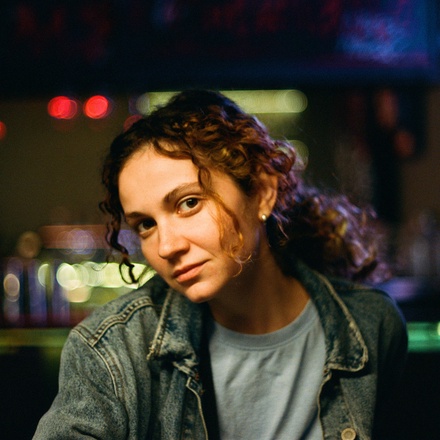
Nina Pikhodchuk
DirectorBiography
Born in Evpatoria in 1992. First education is in philology. In 2020, she completed retraining courses at St. Petersburg State University of Cinematography and Television, specializing in cinematographу. In 2024, she graduated from the Moscow Film School, specializing in directing, curators A.P. Popogrebsky and P.G. Bardin.
Filmography
• December 2024 - short film “Arina” (MFS pre-diploma) •May 2023 – short film “Agora” (currently in post-production) • September 2022 – short documentary film “Ilyusha's Tales” (MFS coursework): director, cameraman • July 2019 – short documentary film “Summer Camp”: director, cameraman.
Directors Statement
The story behind the film "Space Monkey" was born, as it often happens, from a personal experience that at first seemed almost anecdotal. It all began with casting for a classmate’s short film: we were looking for children to shoot scenes involving "space monkey" (a dangerous choking game). I constantly had to engage with parents, explaining in detail how the filming would proceed and emphasizing that the film carried not a negative, but rather a cautionary message. One night at 2 AM, I received a six-minute voice message from one candidate’s mother. She detailed every possible scenario of her daughter’s psychological trauma if the slightest mistake occurred on set. We auditioned over 500 children, and this experience of dealing with highly anxious parents became truly exhausting, leaving me with a sense of profound emotional burnout. All of this coalesced in my mind into a joke I’d tell friends. Yet, during one retelling of this joke, I suddenly realized what had gripped me so intensely and why I kept talking about it: I’d discovered a reflection of my own, deeply personal pain. Because this isn’t a story about wrong choices, but about how we treat those closest to us — about hearing without truly listening. That’s when I reached out to my fellow screenwriters from the course, and together we began transforming my experience into our shared creative project. And when the final dialogue between the protagonist and her mother came together, we cried—because we knew we’d written something truly important. I’m grateful to everyone who took part in this project, for it was these people who helped the film come to life and find its true voice.


