Credits
| Director | Anastasia Pastori |
| Scriptwriter | Anastasia Pastori |
| Producer | Ekaterina Ushakova |
| Cinematographer / DP | Alexander Sudakov |
| Art director | Maria Jans |
| Editor | Anastasia Pastori |
| Editor | Vitaly Mokrushin |
| Sound Designer | Ekaterina Turayeva |
cast
| Elena Ponomareva | |
| Elena Ponomareva |
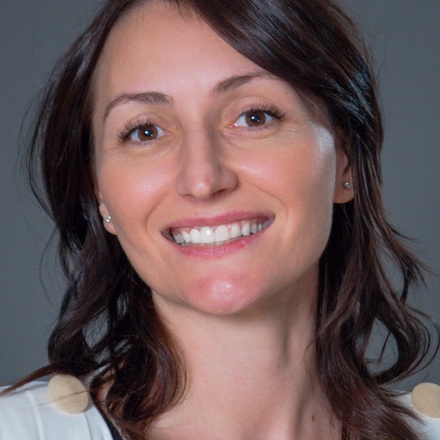
Anastasia Pastori
DirectorBiography
Born in the city of Chita. In 2015, she became a finalist of the Disney "Happiness is!" contest! From 2015 to 2020, she was on maternity leave, raising her daughter. In parallel, she collaborated as a screenwriter with productions, engaged in the development of series. Graduated from the directing department of SPBGATI and the Free Cinema film school with a red diploma. During her studies, she directed four short films: "Petition 1001," "Four Women," "Don't Dust," and "One Window." In 2024, she won the IRI with her series project. In 2025, the fourth season of the series "Nomad" was aired, in which Anastasia participated as a screenwriter. In 2026, 4 short films were included in the Kinopoisk almanac "Forever This Love!" She is currently actively participating in screenplay and directing competitions, and developing applications for on-demand series. Based on the short film "One Window," she has developed an 8-episode series.
Directors Statement
In this film, I portrayed real representatives of the Russian people. Everyone lives in Russia, and at some point anyone can find themselves on different sides of the same window. Some are applicants, others are those being asked. Not only Masha Zadolboeva, but also Grasha Chertova are victims of the system. Due to a mistake in her birth certificate, Grasha has spent her whole life not as *Glasha*, but as *Grasha*. The letter “R” has made her *Rough* and *Rude*. Originally, the film even included a monologue by the character played by Tatyana Orlova, explaining why she fights so fiercely for every letter in official documents. However, during editing, this speech had to be cut for the sake of the film’s overall rhythm. Still, the characters’ names continue to reflect their personalities. As a director, I wanted to visualize the hopelessness of Masha’s attempts to submit her application. With each new attempt, Grasha’s window becomes smaller. At the beginning, it is a large, welcoming window, but by the end, the heroine is knocking on a tiny opening no bigger than the palm of her hand. And the window is closed. Whether Masha will solve her problem remains unclear. Most likely, she will not. For the filming, together with the production designers, we created three versions of the window in different sizes. At the same time, the challenge was to make each one look as similar as possible to the previous one, so that the viewer would not immediately notice the change, but would still feel it. With this artistic device, I try to reach the viewer’s subconscious and evoke emotion. I showed the film to friends, and they said they hadn’t noticed the window shrinking, yet they felt that the heroine was unwell, that the space was suffocating. That is exactly the effect I was aiming for. Those who have seen the film call it satire. I, however, wanted to speak about my pain through laughter. I come from an ordinary Russian family where there was both violence and struggle, as well as a Soviet past with queues and attempts to change something. The crooked letters in the sign “One Window” and the setting are not accidental—they echo my intention to depict not a specifically Moscow reality, but a broader Russian one. In the characters’ dialogues lies my love for ordinary people who speak as they can, who are not cruel inside, and who, instead of destroying, keep knocking on the window. “One Window” is a dark comedy in which everyone can recognize themselves. And may these ten minutes of laughter add a little more life to the audience.


