Credits
| Director | Daniil Chernogortsev |
| Scriptwriter | Vyacheslav Katichev |
| Cinematographer / DP | Daniil Chernogortsev |
| Cinematographer / DP | Dmitry Bobko |
| Cinematographer / DP | Vladislav Politik |
| Cinematographer / DP | Magomed Gaziev |
| Cinematographer / DP | Daniil Bolotnikov |
| Cinematographer / DP | Ilya Galkin |
| Composer | Denis Stelmakh |
| Editor | Daniil Chernogortsev |
| Editor | Nikolai Vavilov |
| Editor | Vladislav Rytkov |
| Sound Designer | Alexander Negodin |
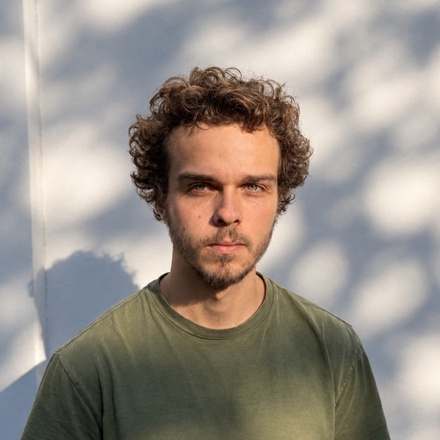
Daniil Chernogortsev
Director01/11/2001
Biography
Director, cinematographer, and producer. A fifth-year directing student at VGIK film school. Find Me Above the Clouds is his feature-length documentary debut.
Filmography
2024 / Chistyy Chetverg / 18 min / fiction
Directors Statement
I found Denis Provalov to be a fascinating and unusual character, and I felt that there was more to his work than just providing physical aid to a stranger. To me, this film is about a man driven by a sense of duty to save everyone around him. But will he manage to save those closest to him? Himself? And his immortal soul? Ultimately, I see this film as being about the salvation of the soul — and about salvation itself. We filmed the story over six months, living and working amidst the action in the Bokovoy Range of the Greater Caucasus, in the mountains surrounding Mount Elbrus. Prior to this, I had virtually no experience of this kind in my life or work, nor had I ever engaged in mountaineering or made any ascents. While filming, I lived in the mountains, climbed peaks with the teams and flew out to the slopes with the rescue crews. I spent two months in a tent and another two at the Emergency Situations Ministry base. I shared the same lifestyle as the people I was filming. They welcomed me into their team, and without their trust, the film would not have been possible. The most challenging part for me was the ascent of Elbrus. Even more challenging was working on Dykh-Tau, one of the highest and most difficult peaks in the Caucasus, with a main summit reaching 5,204.7 metres. I didn't make it all the way to the top, though; our high-altitude cinematographer, Ilya Galkin, accompanied the team on the final ascent. I stayed with the team at the last base camp, acting as the communications link between them and the Bezengi mountaineering camp. For a week, I lived in near-total solitude and isolation, save for the joyful moments when I heard via radio contact that everyone was safe and sound and that the mission was continuing.That was crucial. During that time, we filmed nine rescue operations involving ten mountaineers. Four of them were rescued alive. The most harrowing realisation was that human tragedy plays a crucial role in the dramatic structure of a documentary. In the context of the film, an emergency situation represents an unfolding drama — an event whose progression one might wait months to witness. The roles of the documentary filmmaker and the rescue worker diverge here in a disturbing way: instead of participating in the rescue, the filmmaker's job is simply to film — under no circumstances should they help with the rescue itself. In such moments, you ask yourself: am I a director first, or a human being? Filming funerals was incredibly difficult. At one service, I put down my camera and began reciting prayers for the deceased. However, thanks to the professionalism of my support team and second cinematographer, Dmitry Bobko, we managed to finish shooting the scene.


